Each plan is based on production-ready Xeon configurations capable of sustained load. You pay for real performance, dedicated resources, and network capacity - not marketing specs or oversold hardware.
With Xeon dedicated hosting, the entire server belongs exclusively to you — CPU cores, RAM channels, cache, and I/O bandwidth. There is no contention, no noisy neighbors, and no unpredictable throttling. Your applications run exactly as designed, even under sustained enterprise-level workloads.
Intel Xeon CPUs excel in multi-threaded processing, memory-intensive tasks, and long-running services. Combined with dedicated storage and guaranteed network resources, this creates a stable foundation for databases, virtualization clusters, ERP systems, and high-availability platforms.
Intel Xeon processors are designed for environments where workloads scale horizontally and vertically. High core counts, large cache sizes, and support for massive RAM configurations allow your infrastructure to grow without architectural bottlenecks.
From virtualization and container platforms to analytics engines and transactional databases, Xeon servers deliver stable latency and consistent throughput. When performance must remain predictable at scale, Xeon remains the trusted standard.
Xeon dedicated servers operate on enterprise-grade hardware hosted in secure data centers with controlled access, redundant power, and hardened networking. Security is enforced at the physical, network, and system levels.
Proactive monitoring, DDoS mitigation, and infrastructure redundancy reduce attack surfaces and operational risk. Your workloads remain protected, isolated, and resilient — even under hostile network conditions.
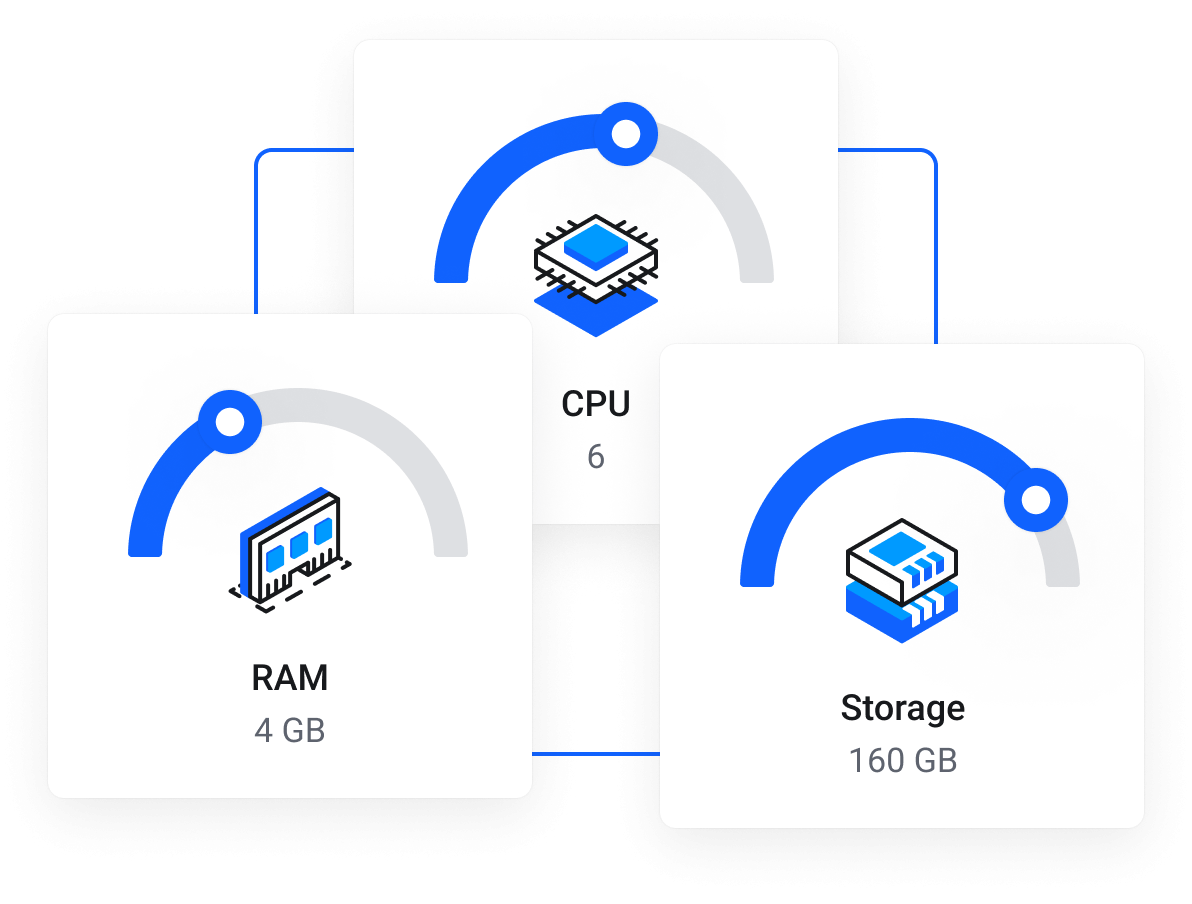
Choose the exact Xeon generation, core count, memory capacity, and storage layout your applications require. Whether you need high clock speeds, maximum core density, or large RAM allocations, your server is built to specification.
Operating system selection, RAID level, network configuration, and future upgrades remain fully under your control. This flexibility allows your infrastructure to evolve as business requirements change — without forced migrations or platform lock-in.
Our engineers handle full server migration — data, configurations, and services — so you can transition to a new Xeon platform without operational disruption. No extra fees, no hidden risks, no unnecessary delays.
Intel Xeon processors are better for servers because they are built for continuous 24/7 operation, high reliability, and heavy workloads. They support ECC (error-correcting) memory to prevent data corruption, offer higher core and thread counts for multitasking, and include enterprise-grade features such as advanced virtualization support and improved stability, making them ideal for hosting websites, databases, and business-critical applications.
The cost of a Xeon server depends on the processor model, number of cores, amount of RAM, storage type, and bandwidth, but entry-level Xeon dedicated servers typically start at budget pricing, while mid-range and high-performance dual-Xeon servers cost more. Basic Xeon servers are suitable for small to medium projects, whereas advanced configurations with more cores, ECC RAM, and NVMe storage are priced higher for demanding enterprise workloads.
A Xeon server is commonly used for resource-intensive tasks such as web hosting, cloud services, virtualization, game servers, large databases, and enterprise applications, where stable performance and the ability to handle many simultaneous users or processes are required.
A Xeon server is a physical (dedicated) server that uses Intel Xeon processors as its CPU, providing dedicated hardware resources such as CPU cores, RAM, storage, and bandwidth to a single user. Unlike shared hosting or low-power consumer CPUs, a Xeon server is designed for professional use cases like web hosting, virtualization, game servers, enterprise software, and large databases where consistent performance and reliability are essential.
Yes, a Xeon server is better than a regular PC-based server because it is built with server-grade hardware designed for nonstop operation, higher workloads, and better reliability, while consumer PCs are optimized for short, intermittent use rather than continuous server environments.