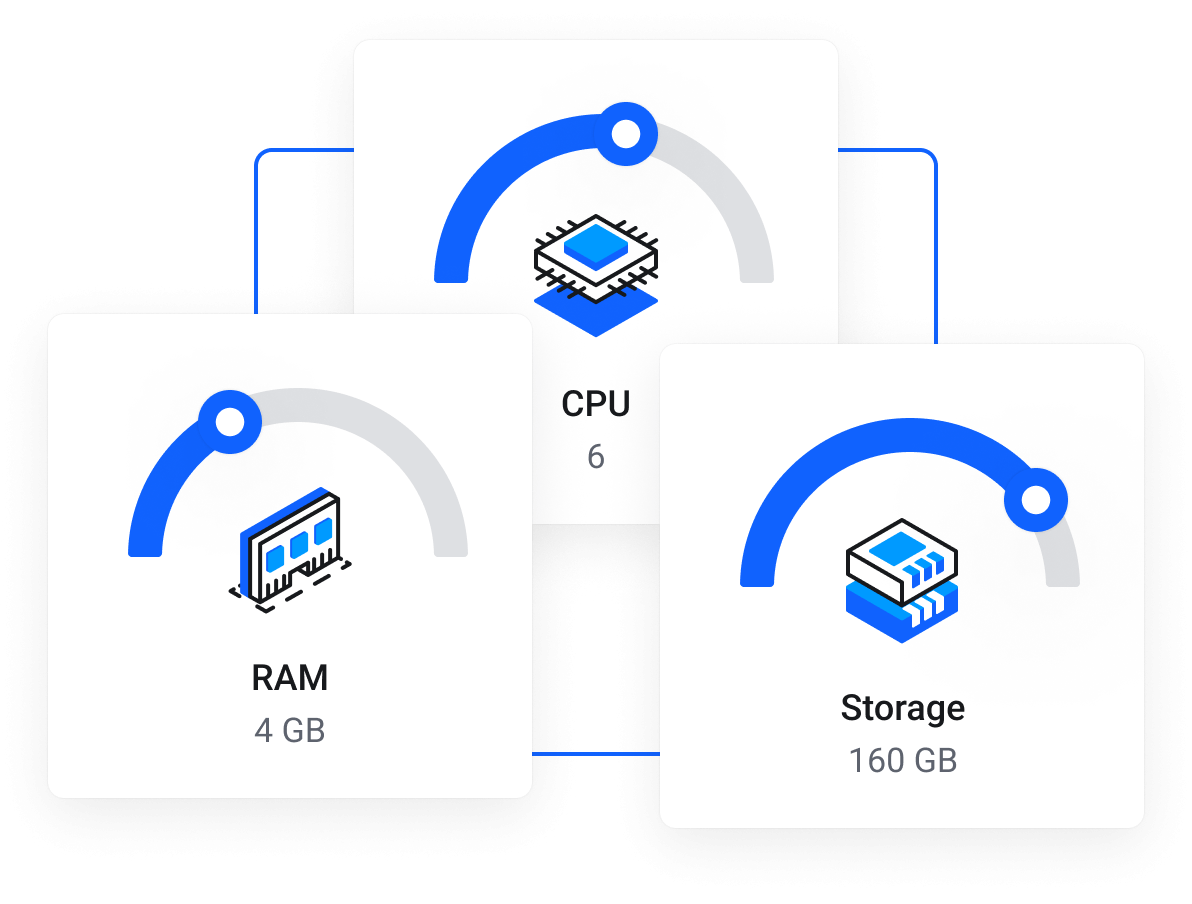
Virtual private servers VPS provide an isolated virtual environment with allocated CPU, RAM, and storage resources for your projects. Unlike standard shared hosting, a VPS virtual private server gives you greater control over the operating system, software, and server configuration. This makes VPS hosting suitable for websites, online stores, applications, databases, CRMs, and other projects that require stable performance.
Cloud2Y provides VPS hosting servers with configurations designed for different workloads. You can choose a VPS server that matches your project requirements, install the required operating system, and manage the server environment according to your needs.
Why Choose a VPS Server?
A VPS virtual private server combines the flexibility of virtualization with allocated computing resources. Each virtual private server VPS operates in an isolated environment, so workloads from other customers do not directly affect your project.
Key benefits include:
- allocated CPU and RAM according to the selected configuration;
- an isolated virtual environment;
- full root access for system configuration;
- the ability to install your own software;
- SSD storage for fast application performance;
- resource scaling as workloads grow;
- backups and snapshots for recovery;
- server and resource monitoring.
VPS virtual servers are especially useful when shared hosting no longer provides enough resources or control, but purchasing physical hardware is unnecessary.
How to Choose a VPS Virtual Server
The right VPS server depends on your project type, expected traffic, software requirements, and workload. A small website may require only a basic configuration, while an online store, CRM, database, or application with many simultaneous users may need more CPU and RAM.
Consider these factors when choosing a virtual private server:
- CPU. The number of cores affects how efficiently the server handles parallel tasks.
- RAM. Additional memory is useful for databases, caching, analytics, and resource-intensive applications.
- Storage. SSD storage is suitable for projects with frequent read and write operations.
- Network. Consider expected traffic and the bandwidth requirements of your applications.
- Operating system. Choose the Linux distribution or another supported operating system required by your project.
- Location. A data center closer to your main audience can help reduce network latency.
Cloud2Y can help you select a VPS virtual server based on your technical requirements and expected workload.
Rent a VPS Server With Full Control
When you rent a VPS server, you get ready-to-use virtual infrastructure without purchasing or maintaining physical hardware. After deployment, you receive access to the operating system and can install a web server, databases, control panels, Docker, and other software.
VPS server rental is suitable for development and testing environments, websites, APIs, corporate services, VPNs, gaming projects, and business applications. Compared with physical infrastructure, VPS servers hosting can be easier to scale when your resource requirements increase.
The VPS server cost depends on the amount of CPU, RAM, storage, and other resources included in the configuration. When comparing the cost of a VPS server, consider whether the selected resources are sufficient for your actual workload rather than choosing based on the monthly price alone.
VPS Hosting for Business and High-Load Projects
VPS hosting is suitable for projects that need predictable resources, an isolated environment, and administrative control. Online stores can use a VPS server for websites, databases, and background processes. CRM systems and business applications benefit from dedicated resources and a stable server environment.
Higher-performance VPS servers are suitable for:
- high-traffic websites and online stores;
- databases and analytics systems;
- SaaS and web applications;
- APIs and server-side services;
- development and testing environments;
- gaming and other specialized projects.
Cloud2Y helps you choose VPS hosting servers according to your project's requirements. If you need to rent a VPS server with a specific amount of CPU, RAM, or storage, you can select a configuration that matches your current workload and allows your infrastructure to grow.
For stable service operation, it is important to maintain sufficient resource capacity rather than constantly running the server at maximum utilization. This helps handle traffic peaks and background processes without significant performance degradation. If your requirements change, the VPS server hosting configuration can be adjusted without moving to dedicated physical hardware.